
Guiding Women’s Health
Every Woman, Every Stage, Healthy Journey with Care.

About this Platform
Gynaeguru is an initiative by Dr. Lalita Vaitheeswaran, aimed at creating a reliable and accessible reference space for both clinicians and patients. The platform brings together curated educational content, clinically relevant topics, and a range of clinical modules designed primarily for informational and reference purposes. These modules are intended to serve as quick reckoners, particularly for young and upcoming medical graduates navigating the field of obstetrics and gynaecology.
In addition, the website features interactive quizzes covering both technical knowledge and essential soft skills. These are designed not only to reinforce learning but also to foster curiosity, engagement, and self-assessment among users.
Recognizing that clinical excellence must be complemented by empathy, communication, and counselling, this platform also emphasizes the importance of these soft aspects of patient care.
There is a dedicated medicolegal section highlighting recent laws, guidelines, and real-world cases to help clinicians stay informed and practice safely.
Together, these elements aim to create a structured, dependable, and evolving knowledge platform for everyday clinical practice.
Gynaeguru stands as a supportive reference, promoting clarity, confidence, and responsible medical care.
Adolescent Health

Menstrual health
Menstrual health is an important part of growing up. Periods are a normal biological process. Maintaining good hygiene by using clean sanitary products and changing them regularly helps prevent infections. Eating a balanced diet, staying active, and managing stress can support healthy menstrual cycles. Talking openly with parents, teachers, or healthcare providers helps adolescents feel confident and informed about their menstrual health.

Mental health counseling
Mental health challenges frequently emerge during adolescence due to hormonal changes, academic pressure, social expectations, and identity development. Depression and anxiety are among the most common mental health disorders affecting adolescent girls.

Nutrition and anemia control
Many adolescent girls suffer from nutritional deficiencies, particularly iron deficiency anemia. Poor dietary habits, meal skipping, and restrictive dieting often worsen this problem. Iron deficiency can lead to fatigue, poor concentration, decreased academic performance, and reduced immunity.

HPV vaccination
The HPV (Human Papilloma virus) vaccine is a critical preventive measure for adolescents, designed to protect against various cancers later in life. It is most effective when administered before an individual becomes sexually active.
Women’s Health

Pregnancy Care
Pregnancy Care focuses on safeguarding the health and well-being of both mother and baby throughout the journey from conception to childbirth. This phase requires regular antenatal monitoring to track fetal growth, detect potential complications early, and ensure a safe pregnancy. Comprehensive care includes nutritional guidance, supplementation, screening tests, and management of conditions such as anemia, hypertension, and gestational diabetes. Effective pregnancy care not only ensures a healthy outcome at birth but also lays the foundation for the long-term health of both mother and child.

Gynaecological Health
Gynecological health needs span all non-pregnancy stages of a woman’s life. Regular screening for cervical health is essential for early detection and prevention of cancers.Safe and suitable contraception, protection from and timely attention to infections, including vaginal and sexually transmitted infections, is necessary. Hormonal balance is vital, with attention to conditions like PCOS and thyroid-related disturbances. Management of fibroids, endometriosis, and pelvic pain is important for quality life. Ongoing preventive check-ups and healthy lifestyle practices support long-term well-being.

Midlife & Menopausal Care
Midlife & Menopausal Care focuses on the evolving health needs of women as they transition through perimenopause and beyond. It addresses common concerns such as menstrual irregularities and distressing perimenopausal symptoms like hot flashes and mood fluctuations. Comprehensive menopause management aims to improve quality of life through individualized, evidence-based care. Special attention is given to bone health.This stage also requires careful monitoring of cardiometabolic risks, including heart health and metabolic changes. Additionally, urogenital health is prioritized to manage symptoms affecting comfort, function, and overall well-being.
Infertility

Female Infertility
Female factor infertility refers to difficulties in conceiving due to problems within the woman’s reproductive system. These may involve disorders of ovulation, structural abnormalities of the uterus or fallopian tubes, or conditions affecting egg quality and ovarian reserve. Common causes include hormonal imbalance, ovulatory dysfunction, tubal blockage, endometriosis, and uterine abnormalities such as fibroids or adhesions. Increasing maternal age is also a significant contributor because egg quantity and quality decline over time. Proper evaluation usually includes menstrual history, hormonal tests, ultrasound, and assessment of tubal patency. Treatment options range from ovulation induction and hormonal therapy to assisted reproductive techniques such as IUI or IVF depending on the underlying cause.

Male Infertility
Male factor infertility occurs when problems with sperm production, quality, or delivery reduce the chances of fertilization. The most common abnormalities involve low sperm count, poor sperm motility, or abnormal sperm morphology. In some cases, there may be complete absence of sperm in semen, known as azoospermia. Contributing factors include hormonal disorders, testicular disease, genetic conditions, varicocele, infections, and lifestyle influences such as smoking or heat exposure. Diagnosis typically begins with semen analysis and may include hormonal testing or imaging studies. Management depends on severity and may involve medical therapy, surgical correction, or assisted reproductive methods like IUI or ICSI.

Unexplanied Infertility
Unexplained infertility is diagnosed when a couple is unable to conceive despite normal results on standard fertility investigations. Tests typically show normal ovulation, open fallopian tubes, and adequate sperm parameters. The exact cause may involve subtle abnormalities that routine tests cannot detect, such as problems with fertilization, embryo development, or implantation. It can also result from complex biological interactions between sperm and egg that remain poorly understood. Although the diagnosis can be frustrating, many couples with unexplained infertility eventually conceive with appropriate treatment. Management often begins with timed intercourse or ovulation induction and may progress to IUI or IVF if pregnancy does not occur.
Obs and Gynae Emergencies

Major Obstetric
In obstetric emergencies, minutes decide two lives;the mother and baby.
Recognize bleeding, seizures, and fetal distress early;rapid response saves lives.
Stabilize the mother first;the fetus survives when the mother survives.Teamwork in the labour room converts crisis into safe delivery.

Early Pregnancy
Early pregnancy pain and bleeding should never be ignored.Rule out ectopic first.
Prompt diagnosis prevents silent internal hemorrhage.Infection after abortion can escalate rapidly. Treat aggressively and early.
Ultrasound and vigilance transform uncertainty into life-saving decisions.

Gynaecological
Sudden pelvic pain is a warning sign.Think torsion until proven otherwise.
Rapid diagnosis protects fertility and prevents complications.
Infections in the pelvis can quickly become systemic emergencies.
Early intervention turns surgical crisis into fertility preservation.
Drug Assist

Patient Assessment and Indication
Before selecting a drug, the clinician should clearly identify the clinical condition, severity, and patient characteristics. Important factors include age, pregnancy status, gestational age, comorbidities (such as hypertension, diabetes, thyroid disease), allergies, and current medications.
In obstetrics, drug selection must also consider placental transfer and fetal safety. For example, drugs used for conditions like Pre‑eclampsia, Preterm Labor, or Postpartum Hemorrhage must follow well-established protocols to avoid harm to the mother and fetus.
In gynecology, assessment focuses more on the underlying pathology, such as infection, hormonal imbalance, or structural disorders.

Evidence-Based Drug Selection
The chosen medication should be based on clinical guidelines, safety profile, and proven effectiveness. Standard recommendations from organizations such as World Health Organization, Royal College of Obstetricians and Gynaecologists, and Federation of Obstetric and Gynaecological Societies of India help guide rational drug choice.
Examples include:
- Oxytocin for prevention and treatment of Postpartum Hemorrhage
- Magnesium Sulfate for seizure prevention in Pre‑eclampsia and Eclampsia
- Clomiphene for ovulation induction in infertility
- Tranexamic Acid for heavy menstrual bleeding
Selection should also consider dosage, route of administration, cost, and availability, particularly in resource-limited settings.

Monitoring, Safety, and Patient Guidance
After prescribing a drug, monitoring for effectiveness and adverse effects is essential. The clinician should evaluate the patient’s response, adjust dosage if required, and watch for complications.
Patient counselling is equally important. Women should be informed about drug benefits, possible side effects, duration of therapy, and warning signs that require medical attention.
In obstetrics, continuous monitoring of maternal vital signs and fetal wellbeing is often necessary. In gynecology, follow-up helps assess treatment response and prevents recurrence of disease.
Minimally Invasive & Robotic Surgery
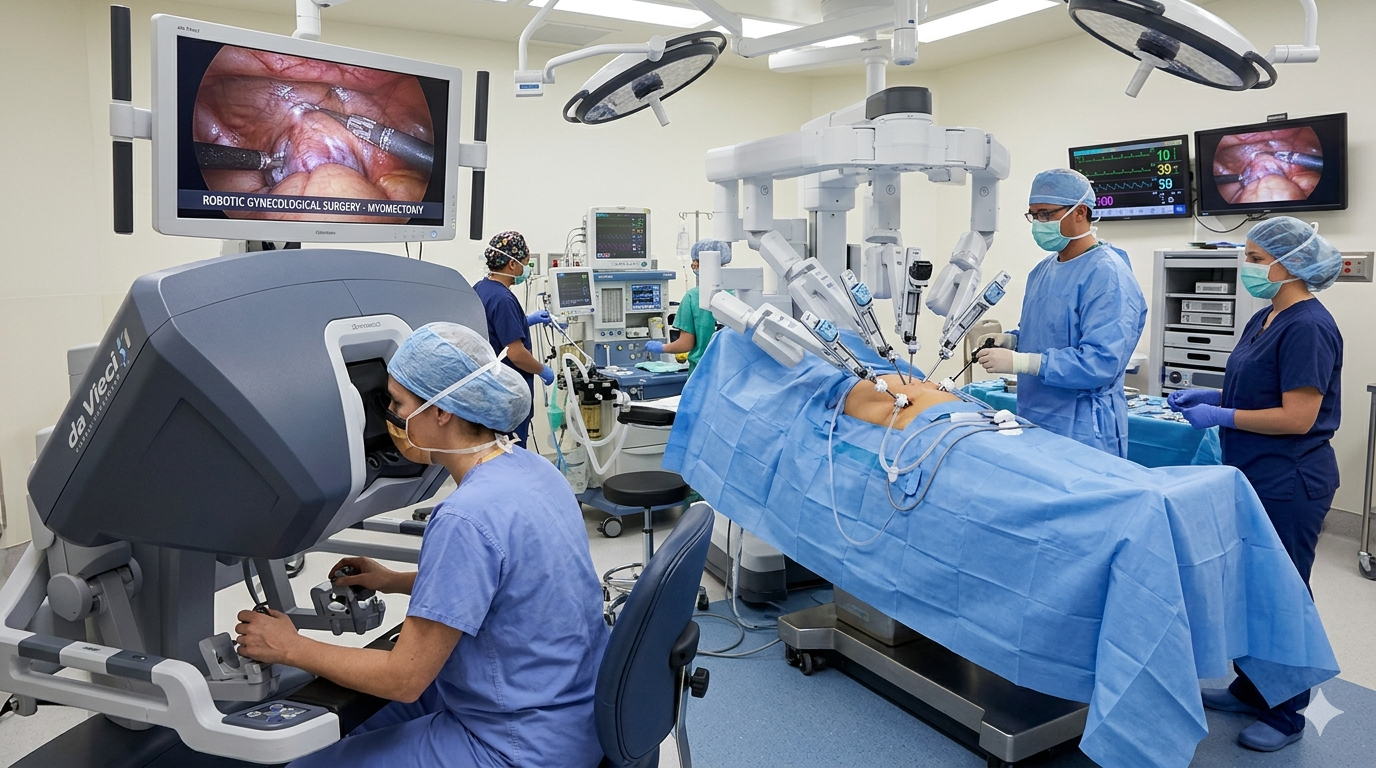
Innovating Surgery
Smarter Surgery for Better Outcomes
Minimally Invasive and Robotic Surgery has transformed modern gynecology by offering safer, more precise, and patient-friendly alternatives to open procedures. Using advanced visualization, small incisions, and specialized instruments, these techniques effectively treat conditions like fibroids, endometriosis, infertility-related disorders, and gynecologic cancers.
Robotic-assisted surgery further enhances precision through 3D visualization, improved dexterity, and tremor control, making it especially useful for complex oncologic and deep pelvic surgeries.
Additionally, office-based procedures such as hysteroscopy and endometrial ablation have shifted many interventions to day-care settings, reducing hospitalization, costs, and improving convenience.
Overall, these advancements result in less blood loss, shorter hospital stays, faster recovery, reduced pain, and better cosmetic outcomes, making them a standard of care in gynecology.
Assistive Devices Used in Obstetrics & Gynecology

Assistive Devices for comfort and care
Assistive braces, aids, and medical devices are essential in obstetrics and gynecology for managing pelvic floor disorders, pregnancy discomfort, postpartum recovery, infertility, sexual dysfunction, and urogynecological issues. Many are safe for home use with guidance and support areas like breast care, pelvic rehabilitation, and menstrual health. Proper use improves comfort, recovery, and quality of life. A clear clinical classification helps in selection and patient counseling, making these devices a key non-surgical component of comprehensive women’s healthcare.
Smart Monitoring in Modern Obstetrics and Gynecology
Advanced Women’s care
through intelligent clinical surveillance
Advances in digital health, wearable biosensors, and the Internet of Medical Things (IoMT) are transforming monitoring practices in obstetrics and gynecology. Modern devices now allow continuous, real-time observation of maternal and fetal health parameters from home or outpatient settings. These technologies integrate wireless sensors, mobile applications, cloud data platforms, and artificial intelligence to transmit physiological data directly to healthcare providers. Such systems help in early detection of complications, improved management of high-risk pregnancies, and reduced need for frequent hospital visits. Real-time remote monitoring is therefore becoming an important component of modern prenatal and gynecological care, improving both patient safety and clinical decision-making.
| Technology | Application |
|---|---|
| Wearable biosensors | fetal heart rate, maternal ECG |
| AI analytics | fetal distress prediction |
| Cloud telemedicine | remote prenatal care |
| IoMT devices | home pregnancy monitoring |
| Smart textiles | continuous maternal monitoring |
| Mobile apps | fertility and cycle tracking |
| Wireless CTG | home fetal monitoring |
Six Legislations Every Gynaecologist Must Know
Reproductive Rights & Abortion
Medical Termination of Pregnancy Act, 1971 (Amended 2021)
Prevention of Sex Selection
Pre-Conception and Pre-Natal Diagnostic Techniques Act, 1994 .
Assisted Reproductive Technology (ART)
Assisted Reproductive Technology (Regulation) Act, 2021.
Surrogacy Regulation
Surrogacy (Regulation)
Act, 2021
Clinical Practice Regulation
Clinical Establishments (Registration and Regulation) Act, 2010.
Maternity Benefit Act, 1961 (Amended 2017)
26 weeks maternity leave. Workplace protections
Medico Legal Cases
The legal landscape for Indian healthcare is shifting rapidly, making it essential for practitioners to stay informed on the latest statutory regulations and judicial precedents. Medico-legal updates in India provide a critical bridge between clinical practice and the evolving requirements of the National Medical Commission (NMC). With the transition from the Indian Penal Code to the Bharatiya Nyaya Sanhita (BNS), understanding the specific nuances of medical negligence and criminal liability has never been more vital. These updates ensure that doctors can navigate complex issues like Informed Consent and documentation while maintaining the highest standards of patient care.

Soft Skills for Gynaecologists
The quality of care in obstetrics and gynaecology is not measured solely by clinical outcomes ; it is equally measured by the human connection forged in the moments of greatest vulnerability.

Communication Skills
Clear and compassionate communication is essential in gynecology, where sensitive issues must be discussed openly and respectfully. It helps patients understand diagnosis, procedures, and treatment options without fear or confusion. Effective communication builds trust and improves adherence to care. It also ensures safer outcomes by reducing misunderstandings.

Interpersonal Skills
Strong interpersonal skills help gynecologists build rapport and create a safe, supportive environment for patients. A respectful, non-judgmental approach encourages patients to share intimate concerns more freely. These skills strengthen long-term doctor–patient relationships. They also enhance collaboration with colleagues and staff.
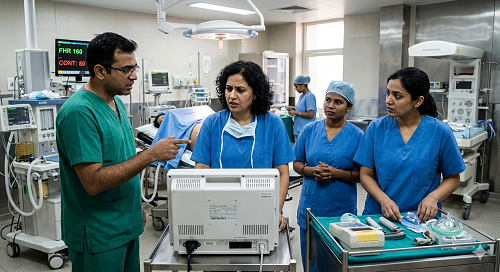
Conflict Management
Conflict management is crucial when dealing with differing opinions, emotional distress, or high-stakes decisions in care. It enables the gynecologist to handle disagreements calmly and professionally. Resolving conflicts effectively maintains trust and prevents escalation. It also supports smoother teamwork in clinical settings.

Emotional Intelligence
Emotional intelligence allows gynecologists to recognize and respond appropriately to patients’ emotions and their own. It is vital in situations like miscarriage, infertility, or complicated pregnancies. High emotional intelligence fosters empathy, patience, and better decision-making under stress. It ultimately leads to more compassionate and patient-centered care
Dr.Lalita Vaitheeswaran
The Clinician Behind the Content

As an obstetrician and gynaecologist, I have long felt the need for a digital platform on women’s health that serves educational, reference, and informational purposes. This platform is a fulfilment of that desire; however, it is not intended to substitute clinical judgement or professional medical decision making.
Being committed to delivering patient care with compassion and sensitivity, I strongly believe that healing extends beyond treatment; it lies in understanding, empathy, and meaningful patient engagement.
Beyond my professional life, I am deeply passionate about creative writing. As a bilingual author writing in both Hindi and English, I have authored 10 books, including a collection of short stories, a book on anecdotes and eight volumes of poetry in English and Hindi.I also have a keen interest in music and believe in its healing potential, often encouraging my patients to embrace music for mind and body harmony.